- Uncategorized
-
by Skippack Pharmacy
Imagine this, You’re 35 years old. You’ve been hovering in the “slightly overweight” category your entire life. Not enough for people to say something, but enough for you to always notice. You’ve heard phrases like: “It runs in your family, there’s not much you can do.” or, “It’s probably just your metabolism.” and for a while, you believed that. However, now that you are starting to approach your 40’s, you may start to have symptoms like: feeling tired quicker than you’re used to, sleep problems, and joint discomfort. Many individuals have tried dieting methods like cutting carbs or skipping meals, but it never seems to stick. This is not because you didn’t care, but because you never had a plan or a sustainable system.
Then, one day it clicks. You stop saying, “I’ve tried, but it never works.” and start asking, “What kind of diet plan would work for me?”. Not something too extreme, nor temporary, but something you will actually follow. Something you can stick with even on a busy Tuesday after a long day at work. If this story sounds familiar, let’s explore some ways to create a consistent and achievable diet plan.
What is The Goal Of a Diet Plan?
The goal of a diet plan will vary for many people. The main goal for overweight adults, which make up a majority of the overweight population, is to:
- Lose weight (1-2 lbs per week)
- Feel comfortable in your own body
- Reduce health risks
However, the only way to achieve those is to have a diet plan that is structured, sustainable, and supports your long-term health. You want long-term sustainability, not a short-term tool.
Diet plans should aim to reduce 1-2 lbs of your weight every week. This may seem minuscule, but you have to keep stacking days on top of one another. If you keep stacking successful days of dieting, you will lose a significant amount of weight. Not only does a proper diet plan chop off a couple pounds, but will also benefit and improve your blood sugar, cholesterol, and blood pressure. Your blood sugar is important because you do not want insulin resistance/diabetes. Maintaining healthy LDL cholesterol levels are important because an excess may cause build up in arteries and play a major role in strokes and heart attacks. Blood pressure is also important because if it gets too high, you may get hypertension which also leads to increased risk of cardiovascular complications. These benefits alone are significant, but achieving and maintaining a healthy weight is also associated with significantly lower cardiovascular risk, with studies showing obesity can increase risk by 70% or more. It is extremely important to have proper cardiovascular health because in the U.S., cardiovascular disease claims 1 in every 3 lives. Even just 5-10% weight loss will help you achieve these long-term benefits.
How to Start and Create Ideas for a Proper Diet Plan
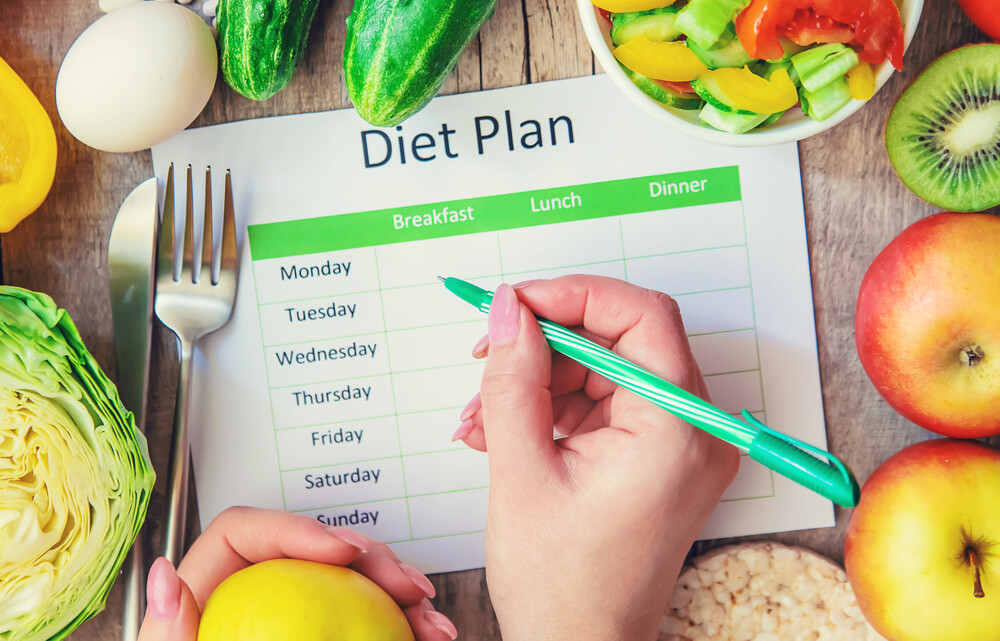
In order to create a diet plan, start off by adding structure and building consistency. The best way to have structure and consistency is to follow a method of dieting. Below are three commonly used methods used to create a diet plan.
The first method is to create a routine such as: Breakfast at 7 a.m., Snack at 10 a.m., Lunch at 12 p.m., Snack at 3 p.m., and Dinner at 7 p.m.. Aim for balance in your meals, not total restriction. Balance looks like having a source of protein, carbohydrates, and healthy fats in each meal. A simple breakfast idea could look like two eggs, a piece of whole grain toast, and an avocado. This method is great because it helps to reduce late night “binge” meals. This method is favored by some because it is simple and very versatile.
Another method is to have repeatable meals, such as having a sweet potato, grilled chicken, and avocado bowl every day for lunch. This is favored for some because it is easy to implement in your day as it becomes a routine. You also are able to “meal prep” for the week so you only have to reach in the fridge and grab your already cooked food in the morning to have your meal for later in the day. Meal prepping basically just means cooking your meals days prior to eating them. First you cook enough meals to last a couple of days, then put them in tupperware and place them in the fridge, then you can grab one meal when it is time to eat. This method is great because it allows you to watch portion control and eat healthy foods consistently.
Another choice is to track your calorie intake. This is favored by many who want a clear number to follow and helps you feel in control. You can track calories using a scale and weighing your food out prior to cooking it then logging it into a calorie tracker app. This is a very accurate and well working method for weight loss when done right. However, this method may not be best for overall health and many find it too tedious and restricting.
Common Mistakes to Look Out For
There are many mistakes that are made when dieting. Some common mistakes are dieting too extreme, relying on motivation, and eating out too much. If you diet too extreme, you will not consistently stick to your plan. The same goes for relying on motivation. Focus more on being disciplined, not motivated when dieting. One of the biggest challenges for dieting is eating out at restaurants too often because the meals are high in sodium, fat, and calories. For example, fast food restaurants have extremely processed meals that are high in fat and lack many nutritional benefits, such as burgers and french fries, that are found in healthier foods like fruit and dairy. The best way to get food is to buy it from the grocery store and cook it yourself. This way you can control what you put in your meals. Also, many people expect dieting benefits to happen after a week. You must remind yourself that it takes time and to not compare yourself to others.
The most important mistake people make when dieting is completely ignoring portion sizes. Although you may be eating healthy food, too much food in one sitting will slow down your weight loss progress. The best way to manage portion sizes is to step back before eating and ask yourself, “What portion will satisfy me, not stuff me?” If you are satiated, stop eating and if you are hungry later then you may finish it. Similarly, you should never eat until you feel sluggish or overly full, this will lead to weight gain over time and hurt your dieting progress.
Favorable Foods
Now that we have talked about what to avoid such as fast food and eating out, we can talk about what foods to gravitate towards. Healthy sources of protein involve beef, fish, and chicken. These have many important vitamins like vitamin D’s in fish for immune support and vitamin B’s in all options. Each vitamin is vital to our well being which is provided by these different kinds of meat. Other protein options like dairy include milk and low fat yogurt. Even if you don’t eat meat, some good options for protein include lentils, eggs, and beans.
Healthy carbohydrate options include non-fried potatoes, vegetables, and rice. Some people recommend cutting carbs, but if you eat healthy sources of carbs you have nothing to worry about, especially if you watch portion sizes. Carbohydrates give us energy for our bodies to function properly.
Healthy fat sources involve avocados, nuts, and olive oil. Fat is also looked at as bad for our health, but with proper sources of it in moderation, fat is actually extremely beneficial for our health. Fats help our brain function, our heart health, and help absorb vitamins.
Example of a full day of eating could look like:
- Breakfast (7a.m.): Two eggs, two pieces of toast, and an avocado
- Snack (10 a.m.): Yogurt with berries
- Lunch (12 p.m.): Chicken breast, rice, and a handful of nuts
- Snack (3 p.m.): Rice cake and a banana
- Dinner: (7 p.m.): Salmon, baked potato, and a drizzle of olive oil
Concluding Words
Now that you have learned about how to effectively create a functioning diet, what foods to eat and which ones to avoid, you can start creating your diet plan and choose which one is right for you. Track your weight loss progress with a scale and your body health with your doctor and how you feel every day. You deserve to feel comfortable in your body and have good health.